AI Trading Agents in 2026 How Autonomous AI Is Changing the Future of Trading
AI trading is moving beyond traditional bots toward autonomous agents that can research markets, build strategies, manage portfolios, and execute trades. Here is how agentic trading works, where it is heading, and what risks developers and traders need to understand.
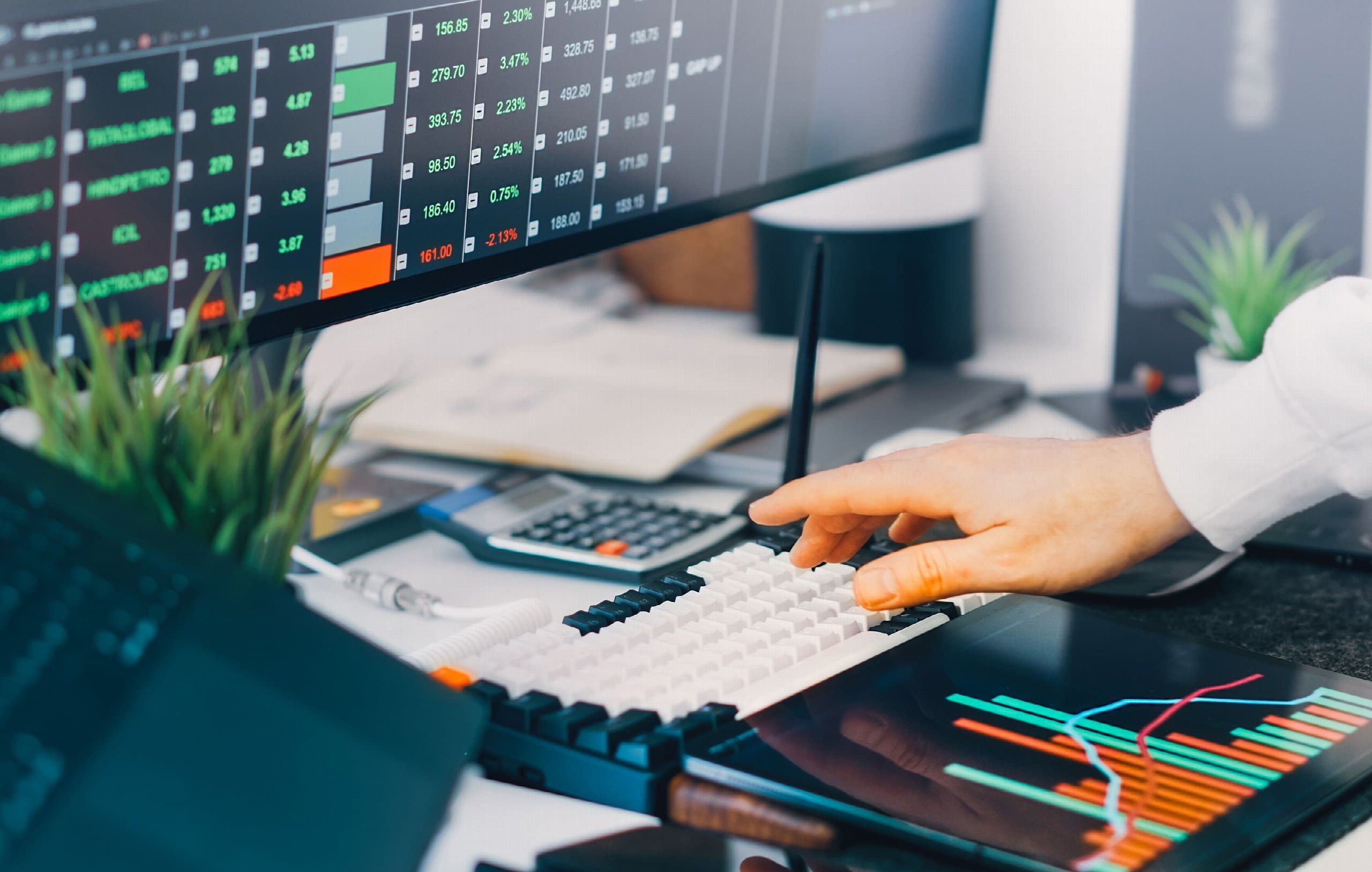
Trading software is entering a new phase. For years, automated trading meant rules, indicators, scripts, and algorithmic systems that followed instructions defined in advance. In 2026, a new category is emerging: AI trading agents that can interpret information, reason about a strategy, use external tools, and take actions with varying levels of autonomy.
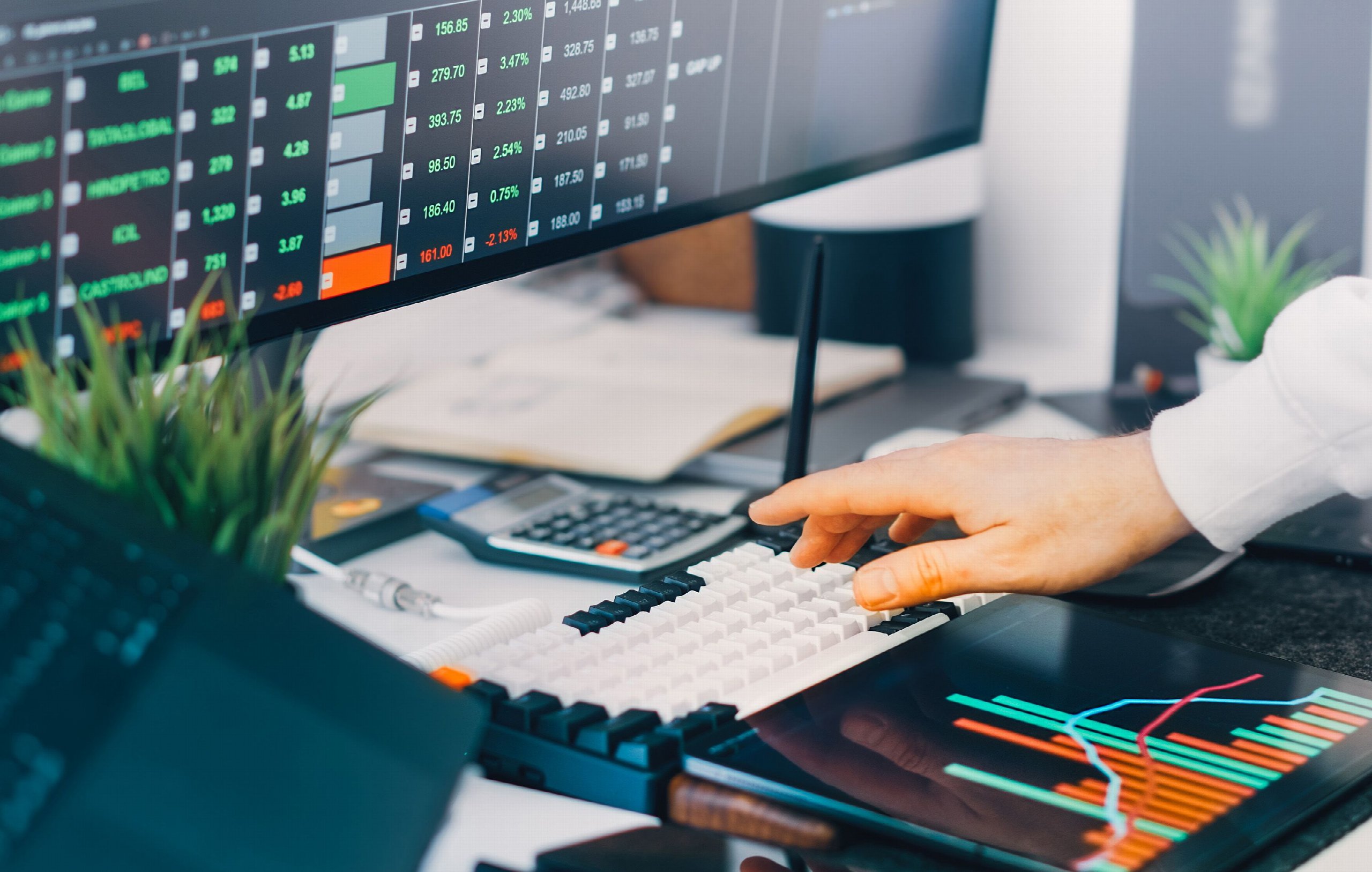
This shift matters because an AI trading agent is not simply a faster trading bot. A modern agent can combine market data, portfolio context, news, research, risk rules, and execution tools into a multi-step workflow. Instead of asking software to perform one predefined task, the user can give an objective and a set of constraints while the agent handles parts of the process.
That does not mean autonomous trading is automatically profitable or safe. Financial markets are adversarial, noisy, and constantly changing. AI systems can make incorrect assumptions, react to incomplete information, overfit historical patterns, or behave unexpectedly. The real opportunity is therefore not AI replaces traders, but AI changes how research, decision-making, risk management, and execution are performed.
What Is an AI Trading Agent?
An AI trading agent is a software system that uses artificial intelligence to observe financial information, reason about a defined objective, use tools or data sources, and take one or more actions. Depending on its design, an agent may only provide research and recommendations, or it may be connected to a brokerage API and place trades automatically.
A traditional trading bot usually follows a deterministic rule such as: if a moving average crosses another moving average, generate a buy signal. An AI agent can operate at a higher level. It may examine price action, volume, portfolio exposure, recent company information, macroeconomic context, and predefined risk constraints before deciding whether a trade should even be considered.
The distinction is important: a bot executes a programmed strategy; an agent can coordinate multiple steps toward a goal.
AI Trading Bot vs. AI Trading Agent
| Capability | Traditional Trading Bot | AI Trading Agent |
|---|---|---|
| Rules | Mostly predefined | Can reason over objectives and constraints |
| Data | Usually fixed data feeds | Can combine multiple data and research sources |
| Decision process | Rule execution | Multi-step analysis and tool use |
| Adaptation | Requires strategy changes | Can adapt its analysis within defined boundaries |
| Actions | Signals or orders | Research, portfolio analysis, strategy generation, and potentially execution |
| Risk | Usually encoded as rules | Requires explicit guardrails, approvals, limits, and monitoring |
How an Autonomous Trading Agent Works
A production-grade agentic trading system can be viewed as a pipeline with several layers:
- Market perception: collect prices, volume, order information, economic data, filings, news, and other permitted inputs.
- Context and memory: understand the user's portfolio, previous decisions, current exposure, strategy rules, and relevant historical context.
- Reasoning: evaluate information and generate hypotheses or candidate actions.
- Risk engine: enforce position limits, loss limits, exposure constraints, trading hours, asset restrictions, and approval requirements.
- Tool execution: call approved market-data, research, portfolio, or brokerage tools.
- Verification: check that the proposed action is valid, within limits, and based on current information.
- Execution: place or queue an order when the system is authorized to do so.
- Monitoring: record decisions, tool calls, orders, outcomes, and model behavior for audit and review.
The most important architectural principle is that the language model should not be treated as the entire trading system. The model can be a reasoning component, while deterministic services enforce the rules that must never be bypassed.
Why AI Agents Are Becoming Relevant to Trading
AI is lowering the cost of processing large amounts of information. An investment workflow that previously required several tools and manual research steps can increasingly be orchestrated through software agents.

The CFA Institute's 2026 research on the Algorithmic Market Hypothesis describes how AI, large language models, and autonomous trading tools could change information processing, price discovery, and market structure. It also highlights a major challenge: when many systems react to similar information or signals, markets can become more crowded and vulnerable to correlated behavior.
At the same time, real-world brokerage products are beginning to expose trading capabilities directly to AI agents. Robinhood announced agentic trading in 2026 and later introduced embedded Robinhood Agents capable of market research, strategy building, and trading within defined controls. Its platform also supports connecting external agents through MCP.
AI Agents and MCP: A New Integration Layer
One of the more interesting developments for developers is the use of the Model Context Protocol (MCP) to connect AI agents with external tools.
Instead of building a completely custom integration for every AI application, a financial platform can expose approved capabilities through a structured tool interface. An agent can then discover or call tools for tasks such as retrieving portfolio information, querying market data, creating watchlists, or submitting an order.
This creates a powerful architecture, but also raises the security requirements. Tool access should be scoped. Credentials should not be exposed to the model unnecessarily. Trading actions should have explicit permissions, transaction limits, approval controls, logging, and emergency shutdown mechanisms.
What a Production AI Trading Architecture Could Look Like
A robust architecture can separate intelligence from execution:
- Data layer: market feeds, fundamentals, news, filings, economic data, and alternative data.
- Feature and research layer: normalization, feature generation, retrieval, analytics, and backtesting.
- Agent layer: LLM-based reasoning, planning, tool selection, and strategy discussion.
- Policy layer: deterministic risk rules, permissions, compliance constraints, and account limits.
- Execution layer: broker or exchange APIs, order management, retries, idempotency, and execution monitoring.
- Observability layer: audit logs, traces, model versions, prompts, tool calls, orders, and performance metrics.
This separation is critical. An AI model should not be able to bypass the risk engine simply because it generated a convincing explanation for a trade.
The Biggest Opportunities
1. Faster Market Research
Agents can summarize large volumes of documents, compare companies, monitor watchlists, and surface information that deserves human attention.
2. Personalized Investment Workflows
Instead of forcing every user into the same dashboard, an agent can work around a user's defined objectives, portfolio constraints, preferred assets, and research process.
3. Continuous Monitoring
An agent can watch predefined conditions and notify a user when something meaningful changes, rather than requiring the user to manually inspect multiple screens.
4. Strategy Prototyping
Developers and quantitative researchers can use AI to translate high-level strategy ideas into testable research workflows. The resulting strategy still needs disciplined validation, realistic transaction costs, and out-of-sample testing.
5. Financial Software Automation
The broader opportunity may be larger than trade execution itself. AI agents can automate portfolio reporting, risk summaries, reconciliation, research pipelines, compliance workflows, and other repetitive financial operations.
The Risks of Autonomous AI Trading
Autonomy increases both capability and responsibility. Several risks deserve particular attention.
Hallucination and Incorrect Reasoning
LLMs can generate plausible but incorrect statements. A trading system must never assume that fluent reasoning means factual accuracy.
Overfitting and False Signals
AI can identify enormous numbers of statistical relationships. Some will be accidental. As CFA Institute research notes, cheaper analysis can increase false positives and create new forms of algorithmic crowding.
Model Drift
Market relationships change. A model that performs well under one regime may fail under another. Continuous monitoring and periodic validation are essential.
Correlated AI Behavior
If many agents consume similar data and use similar models, they may make similar decisions at the same time. That can amplify volatility and liquidity risk.
Security and Tool Abuse
An agent connected to a brokerage account is a high-value target. Authentication, authorization, secret management, sandboxing, tool allowlists, rate limits, and transaction controls should be treated as first-class requirements.
Execution Risk
A correct strategy can still produce poor results because of slippage, spreads, liquidity, rejected orders, latency, partial fills, or unexpected market conditions.
Why Human Oversight Still Matters
Fully autonomous execution should not be the default architecture for every use case. A safer design can use progressive autonomy:
- Level 1 — Research: AI analyzes information but cannot trade.
- Level 2 — Recommendations: AI proposes trades and explains the reasoning; a human approves them.
- Level 3 — Guarded execution: AI can execute within strict predefined limits.
- Level 4 — Higher autonomy: the agent operates continuously with strong controls, monitoring, and emergency intervention.
This approach lets teams increase autonomy only when the system has demonstrated reliability under realistic testing.
What the Future of Agentic Trading Could Look Like
The next stage of trading software is likely to be less about a single AI model and more about agentic systems connected to specialized tools.
Imagine a portfolio agent that can monitor markets, retrieve current information, evaluate portfolio exposure, run approved research workflows, consult a risk engine, propose a strategy, request approval, execute a trade, and then explain exactly what happened. Each step can be logged and independently verified.
That is closer to an intelligent financial operating system than a conventional trading bot.
Research is already exploring these possibilities. The Bank of England has highlighted the growing use of autonomous AI in financial markets and the difficulty of validating and bounding systems as market conditions change. Academic work is also studying autonomous AI agents in financial and decentralized-finance environments.
What Businesses and Developers Should Do Now
- Start with decision support and research before granting execution permissions.
- Keep deterministic risk controls outside the LLM.
- Use current, verifiable data and clearly track data freshness.
- Log every important model decision and tool invocation.
- Test against changing market regimes rather than relying only on historical backtests.
- Build approval workflows for sensitive actions.
- Use least-privilege access for financial tools and APIs.
- Design emergency stop mechanisms before enabling autonomous execution.
Final Thoughts
AI trading agents represent a major evolution in financial software. The technology is moving from systems that simply execute predefined rules toward systems that can research, reason, coordinate tools, and act.
But the winning approach will not be the system with the most autonomy. It will be the system with the best combination of data quality, strategy validation, risk controls, security, observability, and carefully bounded autonomy.
For developers, fintech companies, and trading platforms, the opportunity is significant: build AI systems that make financial workflows faster and more intelligent without sacrificing control and accountability.
At MetaLinx Innovations, we build scalable software, AI-powered systems, SaaS platforms, and API-driven digital products for modern businesses. If your organization is exploring AI agents, financial automation, or intelligent software workflows, the right architecture can turn an experimental idea into a production-ready platform.
Sources and Further Reading
- CFA Institute — The Algorithmic Market Hypothesis
- CFA Institute — Artificial Intelligence and the Future of Finance
- Bank of England — Financial Stability Report, July 2026
- Robinhood — Robinhood is Now Open to Agents
- Robinhood Agents
- Pexels — Photo by Jakub Zerdzicki
- Pexels — Photo by Déji Fadahunsi
- Pexels — Photo by Alex Luna
Disclaimer: This article is for educational and technology-industry discussion only. It is not financial, investment, or trading advice, and it does not recommend buying or selling any security.
- #AI Trading
- #AI Trading Agents
- #Agentic AI
- #Agentic Trading
- #AI Trading Bots
- #Autonomous Trading
- #Algorithmic Trading
- #AI in Finance
- #Financial Technology
- #Trading Automation


Comments
No comments yet — be the first to share your thoughts.
Leave a comment